Nobody talks about Uzbekistan as a place to work from. They talk about Samarkand, the Silk Road, the architecture. They talk about it as a trip. That framing is both accurate and limiting.
I spent two weeks based in Tashkent in June, with a few days in Samarkand. The city surprised me in ways I wasn’t expecting. Not the obvious things, the modernity, the infrastructure, the food, but smaller things. The way the streets empty in the afternoon heat and come alive after dark. The quality of the cafés. The fact that the people who seem coldest on first meeting are often the ones who go furthest out of their way to help you. Tashkent isn’t performing friendliness for tourists. It’s something quieter and more earned than that.
Put simply: Uzbekistan is a fascinating place to visit and a workable place to base yourself for a month. It is not yet a nomad base in any meaningful sense. There is no community, no visa built for remote workers, no infrastructure that says “we’ve thought about you.” What it has is cheap daily life, solid internet, good food, and an atmosphere that feels nothing like anywhere else. For someone who wants discovery more than convenience, that’s enough. For someone who needs the scaffolding that Tbilisi or Lisbon provides, it isn’t.
Come with the right expectations and Uzbekistan delivers. Come expecting a ready-made nomad experience and you’ll be writing frustrated reviews within a week.
Why Uzbekistan right now
The timing argument for Uzbekistan is real, even if it’s not the same argument as Kazakhstan. Uzbekistan has been opening up fast. Tourism hit 7.2 million visitors in 2025, a 25% jump from the year before. The government has made foreign arrivals a stated priority under President Mirziyoyev, and the practical changes have followed: a streamlined e-visa system, expanded visa-free access, biometric e-gates at Tashkent Airport, and plans to keep pushing the numbers higher.
From January 2026, US citizens joined the visa-free list alongside UK, EU, Australia, and Canada. That’s not a small thing. A year ago, an American nomad needed to apply for an e-visa to enter. Now they don’t.
There’s no digital nomad visa yet. The “My Second Home” programme exists but it’s specifically for Khorezm province, a regional tourism play, not a framework for working in Tashkent. If and when Uzbekistan launches something equivalent to Kazakhstan’s Neo Nomad Visa, the picture changes considerably. Right now, you’re working within a 30-day tourist window, which limits how seriously you can treat it as a base rather than an extended stop.
What the nomad world hasn’t caught up with is how liveable Tashkent actually is. The modern neighbourhoods would fit quietly into central Europe. The café culture is real and high-quality. The metro is beautiful and cheap. The city has the bones of somewhere that could attract remote workers, but it hasn’t had the visa framework or the community infrastructure to make it happen yet. You’re early here. Whether that’s an advantage or an inconvenience depends entirely on what you want from a place.
Tashkent has the bones of somewhere interesting. The community just hasn’t shown up yet.
What does a nomad life actually cost in Uzbekistan?
Properly cheap, with a caveat. The daily cost of food, transport, and coffee is very low, the kind of low where you stop checking prices after a few days of living there. A full lunch at a local restaurant runs under £2. A cab across the city costs less than a London bus fare. The places where costs climb are accommodation in the modern central neighbourhoods and anything imported or international. Stay in a premium area and you’ll pay for it. Live more locally and the numbers drop considerably.
A realistic budget for a nomad in Tashkent, decent apartment, eating well, regular taxis, a coworking membership, and occasional weekend trips, sits at £600 to £900 per month. That’s consistent with current data and with what I spent. If you stay in Mirabad or the upscale northern end of town, push that figure up by £100 to £150.
| Category | Cost | Notes |
| Accommodation | £280–£420/mo | Long-term 1-bed. Modern areas (Mirabad, Yunusabad) at the higher end |
| Food | £100–180/mo | Local restaurants and cafés. Meat-heavy, generous portions, very affordable |
| Taxis | £25–45/mo | Yandex Taxi is very cheap. Metro tickets too. No need to own anything |
| Coworking | £70–120/mo | Monthly membership at C-Space or GroundZero. Cafés viable for lighter days |
| SIM / data | £8–15/mo | Local SIM (Ucell or Beeline) covers city use comfortably |
| Total estimate | £600–900/mo | Comfortable, including occasional weekend travel |
To highlight how cheap it can be, I took a Yandex Taxi in Tashkent that lasted 15 minutes and cost just over a £1.
Getting there and visas
The visa situation is simple for most Western passport holders, and it’s been getting better. UK, EU, Australian, and Canadian citizens get 30 days visa-free: no application, no fee, no appointment. US citizens got the same treatment from January 2026 under a presidential decree. You land, passport gets stamped, you’re in.
One thing to know: technically you’re required to register with the authorities within 3 days of arrival. In practice, any hotel or registered guesthouse handles this automatically and hands you a small paper slip as proof. If you’re staying in a private apartment, registration is on you. Keep those slips, because border control can ask for them when you leave. It’s more bureaucratic friction than actual risk, but don’t ignore it.
Tashkent has good air connections from Dubai, Istanbul, Doha, and a growing list of European hubs. It’s easier to get to than most people expect. High-speed trains connect Tashkent to Samarkand (roughly 2 hours) and Bukhara (3.5 hours), worth knowing if you’re planning to move around.
For stays beyond 30 days, there’s no clean option. The e-visa system allows up to 30 days per entry. Extensions are difficult. The most practical route is a border run to Kazakhstan or Kyrgyzstan and a fresh 30-day entry, as both countries offer visa-free access to most Western passport holders. It’s workable but it’s not elegant, and it signals clearly that Uzbekistan hasn’t built for longer stays yet.
There is no digital nomad visa for Uzbekistan as of 2026. The “My Second Home” programme is specifically for Khorezm province and doesn’t apply to Tashkent-based nomads in any practical sense.
Where to actually base yourself
Tashkent is where you’ll end up, and it’s the right call. Tashkent is the only city in Uzbekistan with the infrastructure for actual remote work: coworking spaces, reliable internet, decent cafés, easy transport. It’s a big city of 2.5 million people with layers to it: a modern commercial centre, Soviet-era boulevards, a historic old town, and newer developments that wouldn’t look out of place in a mid-tier European capital.
The area around the Mirabad and Yakkasaray districts in the centre, is where the modern cafés, upscale apartments, and international restaurants cluster. It’s the most comfortable landing zone for a first visit, though it carries a price premium on accommodation.
Yunusabad, to the north, is popular with expat professionals and young locals. Newer buildings, shopping centres, an international atmosphere. More space, slightly lower rents. The trade-off is distance from the most interesting parts of the city.
Chilanzar, to the west, is the value option: well-connected by metro, good local amenities, cheaper apartments, more lived-in neighbourhood feel. Less Instagram-friendly, more practically useful.
One thing worth knowing about daily life in summer: Tashkent empties between about noon and 6pm. At 44°C in June, this isn’t optional. It’s a rational response to the conditions. Locals plan their lives around it. As a nomad, this means morning work sessions, an afternoon hidden in air conditioning, and then everything comes alive in the evening. The markets, the restaurants, the parks, it all happens after the heat breaks. Plan your day accordingly and it becomes a rhythm rather than a problem.
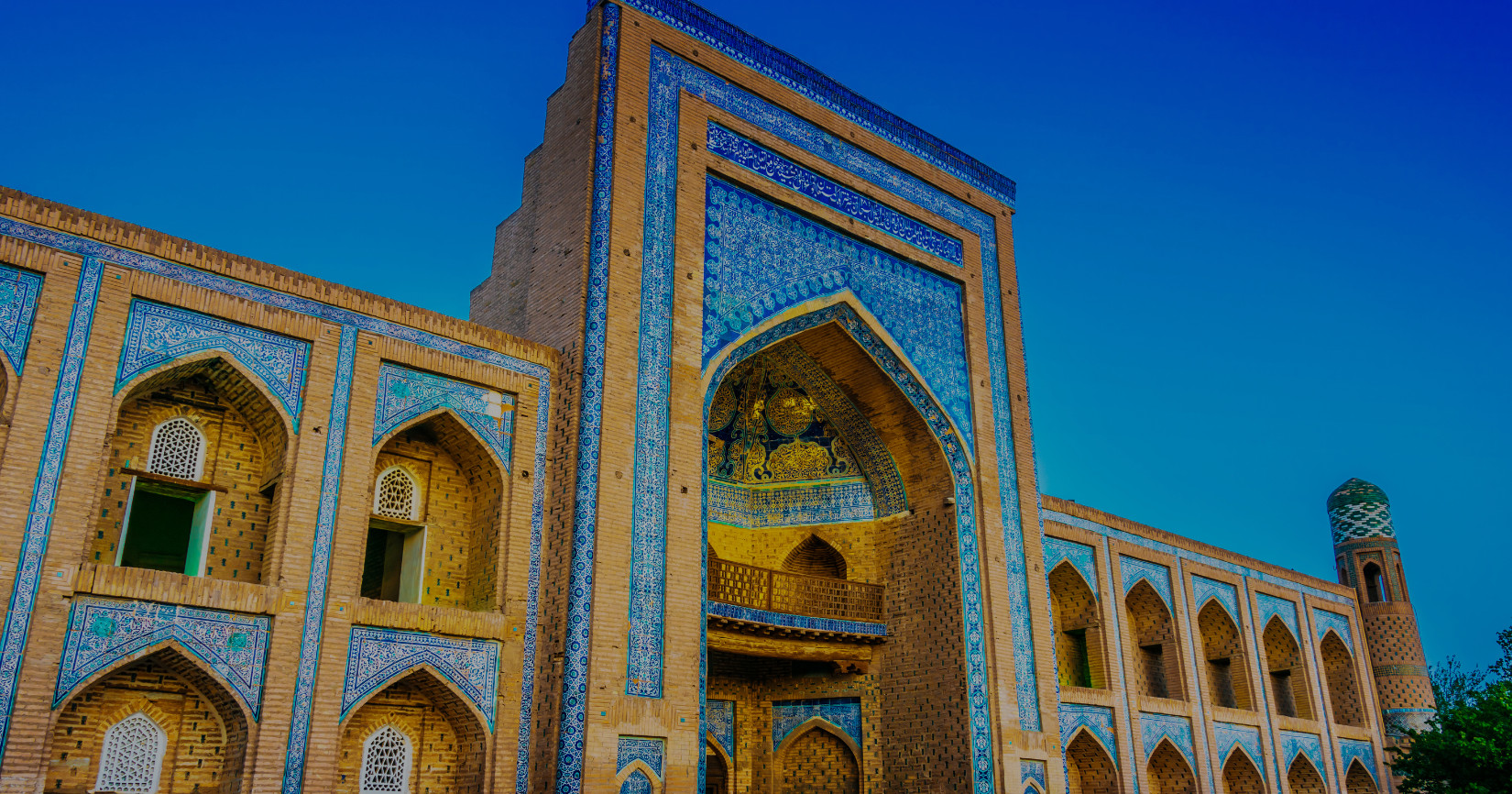
Samarkand is worth a few days from Tashkent. It’s the place that actually matches what people imagine when they think of Uzbekistan: the Registan, the Shah-i-Zinda, the architecture. But it’s not a nomad base. The coworking infrastructure is thin, the café culture is underdeveloped compared to Tashkent, and the city functions primarily as a tourist destination rather than a place people work from. Go for the weekend. Come back.
Internet, coworking, and working hours
Better than you’d expect. Uzbekistan’s fixed broadband average hit 87 Mbps in 2025, putting it ahead of many countries people happily work from. Tashkent is the best-connected city. Café WiFi is reliable, the cafés here are high-quality and quiet, good places to work, and nobody chases you out. For lighter days or email-focused work, cafés handle it fine.
One practical warning that can’t be softened: VPN reliability in Uzbekistan is poor. At least one major provider (NordVPN) reportedly doesn’t work at all, not on café WiFi, not on a local SIM, not anywhere. If you rely on a VPN for client work, security, or accessing content from home, test multiple providers before you commit to a longer stay. This is a real friction point for some nomads and a non-issue for others. Know which category you fall into.
Banking and money
Revolut, Wise, and Monzo all work in Tashkent for card payments. Visa and Mastercard are accepted at hotels, mid-range restaurants, and shopping centres. Outside those contexts, local markets, smaller restaurants, neighbourhood shops, taxis, you’ll want cash. Uzbekistan still runs significantly on it. Withdraw a reasonable amount on arrival; ATMs are easy to find in the city and standard international fees apply.
The local currency is the Uzbekistani Som (UZS). Exchange offices (called obmenka) are everywhere and rates are government-standardised, so there’s no need to shop around. If you’re making international transfers or receiving payments, Wise is the most practical option. Local payment apps Payme and Click are used for everyday transactions by residents, worth knowing if you end up staying longer and getting a local card.
SIM and connectivity
Airalo eSIM works on arrival and is the simplest option for a short stay. Once you’re settled, a local SIM from Ucell or Beeline gives you better rates and a local number, useful if any apps or services require local verification. Local SIMs are cheap and easy to get from any mobile shop with your passport.
Coverage is solid throughout Tashkent. If you’re travelling to Samarkand or Bukhara, connectivity holds up on the main routes. Download offline maps before heading anywhere rural or into the mountains east of the city — coverage drops on the longer drives.
The VPN issue applies here too: if you need one, test it before relying on it. Not all providers work reliably in Uzbekistan.
Community and social life
There is no nomad community in Tashkent. Not a thin one, essentially none. No Telegram groups with real activity, no established meetups, no coworking-to-social pipeline. If you go looking for other remote workers to share a workspace or a dinner with, you will largely not find them. This is the single biggest structural difference from somewhere like Tbilisi or even Almaty.
What you have instead is locals. And Uzbek culture has a warmth that operates differently from what most Westerners are used to. The surface impression is reserve, people don’t light up on first contact the way they might in, say, Georgia. But they’ll go out of their way to help a stranger, flag you down to point you in the right direction, spend 20 minutes translating a menu. The helpfulness is real. It just doesn’t announce itself.
English is limited. Younger Tashkent residents in commercial areas often have some. Outside that demographic, you’re working in Russian or Uzbek, neither of which most nomads will have. Google Translate’s camera feature becomes a daily tool, menus, signs, receipts. You get used to it. It accumulates over a month in a way it doesn’t over a week.
The chaikhana tradition, teahouses that function as social infrastructure, is worth leaning into. Quiet, high-quality, no pressure to leave. Some of the best working and thinking time I had in Uzbekistan was in one of these, with a pot of green tea and nobody bothering me.
Modest dress matters more here than in Kazakhstan. Not as a rule enforced on foreigners, but as a cultural signal. People notice. It affects how interactions go. Worth adapting to rather than testing.
The honest downsides
The heat is a serious constraint. June through August in Tashkent means 40°C+ regularly, and the city adapts accordingly. Which means it largely shuts down for a significant portion of the day. If you’re there in summer, your working rhythm will be dictated by temperature, not preference. Spring and autumn are the right times to come. If you visit in June expecting a normal working day, you’ll be surprised in ways that aren’t entirely welcome.
No nomad visa means no long stays without friction. 30 days is the ceiling unless you’re willing to do a border run or go through a traditional visa process. That limits Uzbekistan to an extended stop rather than a proper base for most people. Kazakhstan solved this problem in late 2024. Uzbekistan hasn’t yet.
VPN reliability is poor. If your work requires one, for security, client access, or accessing content from home, verify that your provider works before committing. At least one major provider fails entirely. This is unusual and worth treating as a real planning consideration rather than a minor annoyance.
The social ceiling is low without effort. Without a nomad community, meeting people who share your context requires deliberate work: language exchange groups, local events, simply spending consistent time in the same café until faces become familiar. Entirely possible, but it’s effort that other destinations don’t require in the same way.
Activities beyond the cities are limited. Samarkand is worth the trip. Bukhara is worth the trip. Beyond those, the things to do with a weekend are parks, markets, and not much else. If you need an active outdoor lifestyle or constant novelty to feel settled somewhere, Tashkent will feel thin after a few weeks.
Sightsaw Studio works with tourism boards to attract nomads who stay longer.
Monthly cost calculator
Quick reference
| Country | Uzbekistan |
| Primary cities | Tashkent, Samarkand |
| Nomad score | 5.0 / 10 (potential 7.0) |
| Monthly budget | £600 to £900 comfortable |
| Long-term rent | £280 to £420/month (1-bed) |
| Short-term rent | £20 to £35/day |
| Visa-free | 30 days, UK, EU, US, AU, CA |
| Digital nomad visa | None |
| DNV income req. | N/A |
| Internet (Tashkent) | 87 Mbps fixed broadband average |
| Time zone | UTC+5, no daylight saving |
| Best months | April to May / September to November |
| Avoid | June to August (extreme heat, 40°C+) |
| Top coworking | C-Space, Tashkent (multiple locations) |
| Best SIM | Airalo eSIM or local Ucell/Beeline |
| Cards | Revolut, Wise, Monzo all work |
| Cash needed | Yes, carry it especially for markets and taxis |
| Language | Uzbek and Russian dominant. Very limited English. |
| Nomad community | Essentially none |
| Safety | Low risk. One of Central Asia’s safer capitals. |
| Last verified | April 2026 |