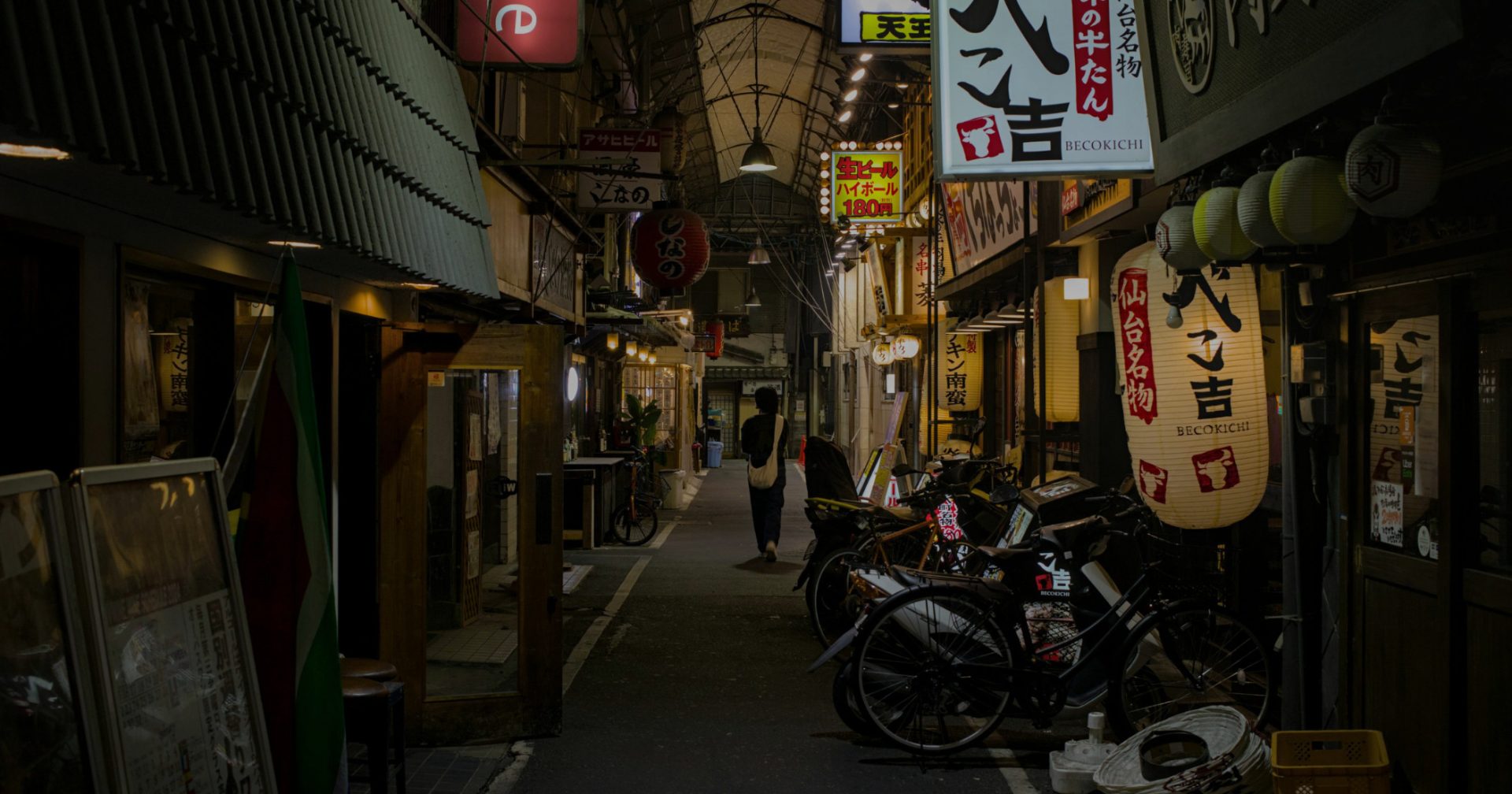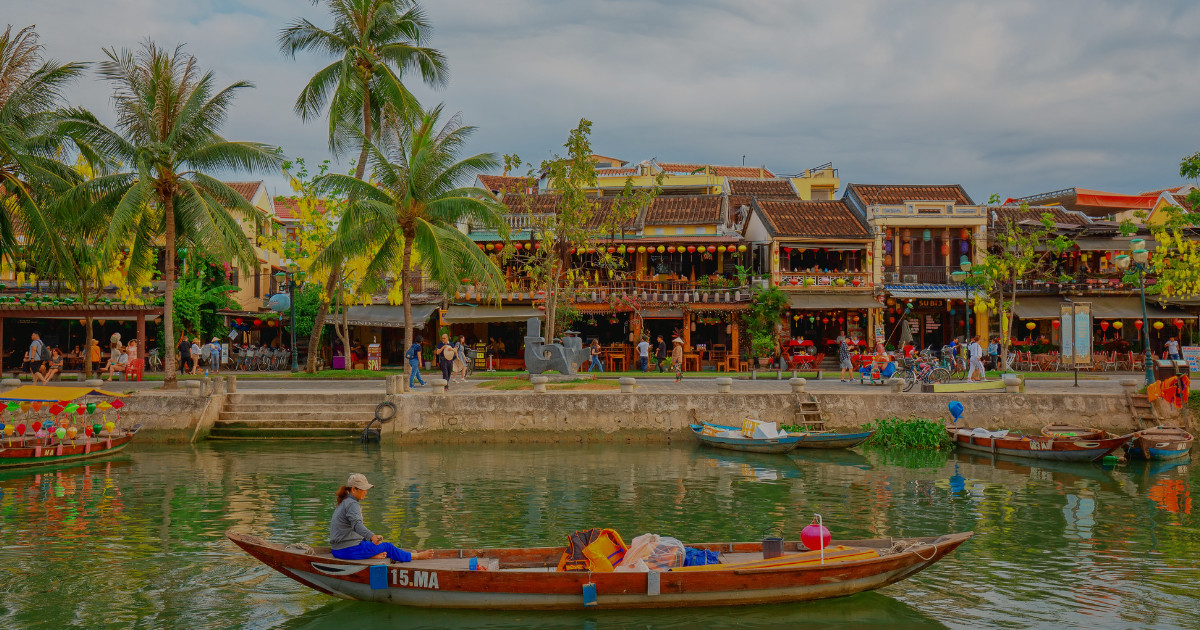
Vietnam doesn’t need an introduction. That’s the problem. Everyone’s been, or knows someone who has, or saw the photos and filed it under “someday.” The mental image is already formed before you arrive: motorbikes, lanterns, pho, beaches. You think you know what you’re walking into.
You don’t.
The thing that hits you first, if you base yourself in Da Nang, isn’t the coastline or the food. It’s the construction. They start early here, before 7am in most neighbourhoods, and the sound of building is the alarm clock that nobody mentions in the guides. Vietnam is building itself at speed, and you feel it every morning. That detail matters because it tells you something true about the place: this is a country on the move, with all the energy and friction that comes with it.
What I didn’t expect, across multiple trips over multiple years, was the quality of the kindness. Not the transactional warmth of a tourist economy, but something more considered. Once you find your neighbourhood café and become a regular, once you’re not just another person passing through, Vietnamese people are genuinely happy you’re there. That takes a few days to discover. Most visitors leave before it happens.
As a base, Vietnam makes a strong argument. The money goes far, the internet is legitimately excellent, and the food alone is worth the plane ticket. Da Nang and Hoi An offer two versions of the same proposition at different volumes: beach city with infrastructure, or ancient town with slower pace. Ho Chi Minh City delivers urban energy and an enormous social scene. Hanoi gives you culture, history, and a pace that’s more considered than the south. All four work. The choice depends entirely on who you are.

Save money. Eat well. Live well. Vietnam is one of the few places where all three happen at the same time.
Why Vietnam right now
Da Nang ranked second globally on Nomads.com in 2026, and Forbes named it one of the world’s top eight digital nomad cities, one of only two in Asia. The nomad world has arrived, which cuts both ways. The infrastructure that comes with that recognition, coworking spaces, coliving options, a self-sustaining social scene, is genuinely useful. The price creep that follows can be annoying.
The more interesting timing argument is the visa one. Vietnam still does not have a dedicated digital nomad visa as of April 2026. A 5-year Talent Visa launched in 2025 but requires nomination by a Vietnamese institution and is aimed at academics and researchers. A Golden Visa has been proposed but has no confirmed timeline. For now, most nomads operate on a 90-day e-visa with quarterly visa runs. It works, but it is friction that comparable destinations in Southeast Asia have removed. Thailand and Malaysia both have formal digital nomad pathways. Vietnam does not, yet.
That gap is also the opportunity window. The country is clearly moving toward formalising its remote work offer. When a proper nomad visa lands, and the trajectory strongly suggests it will, Vietnam stops being a place you navigate around and starts being a place you commit to. Getting comfortable here now, before the policy catches up with the reality on the ground, puts you ahead of the crowd that will follow.
The practical case is already overwhelming. Fixed broadband averages around 165 Mbps nationally, putting Vietnam in the top 35 countries globally. Da Nang leads the country in 5G speeds. The food is extraordinary. A dinner for two at a restaurant you’d genuinely choose over somewhere at home costs £15 on a splashy night. And for a country this far ahead on the fundamentals, the fact that it hasn’t yet attracted the policy overhead or the price inflation of Bali or Lisbon is genuinely unusual.
What does the digital nomad life actually cost in Vietnam?
Cheaper than you think, and the ceiling is low enough that premium feels affordable. A comfortable month in Da Nang, covering a one-bed apartment near the beach, regular café working, gym, and eating well with the occasional western meal and a few beers, comes in at £600 to £900. Hoi An runs slightly higher given the premium near the old town. Ho Chi Minh City and Hanoi sit in the £700 to £950 range once you factor in slightly higher rents in the popular expat areas.
The clearest signal is food. A full bowl of Mi Quang, the Central Vietnamese turmeric noodle dish you’ll eat more times than you can count, costs around £1.20. A beer at a local spot is under £1. Even when you find yourself sitting somewhere nicer, the bill for two with drinks rarely clears £20. I’ve been coming back for three months a year and I still do a small double-take at the total. That feeling doesn’t go away.
| Category | Cost | Notes |
| Accommodation | £220–£380/mo | 1-bed long-term lease near beach. Hoi An £280–£420. HCMC/Hanoi £310–£480. |
| Food | £150–£200/mo | Mix of street food, local restaurants, occasional western. Eating purely local cuts this further. |
| Transport | £35–£50/mo | Grab or motorbike rental. |
| Coworking | £65–£90/mo | Hot desk monthly. Café working is a fully viable alternative most days. |
| Utilities and internet | £20–£30/mo | Usually included in rent. Broadband £8–£12/mo if separate. |
| Social and leisure | £70–£100/mo | Gym ~£15/mo, massages ~£8–£12/hour, day trips, drinks. |
| SIM and data | £8–£12/mo | Local Viettel SIM. Faster and cheaper than eSIM for long stays. |
| Total estimate | £600–£860/mo | Comfortable Da Nang lifestyle. HCMC and Hanoi add roughly £80–£150. |
One hidden cost to budget for: the visa run. Every 90 days, most nomads fly out to Thailand, Laos, or Cambodia and come back on a fresh e-visa. A return flight and two nights somewhere pleasant costs £120 to £180 per run. Over a year, that is £360 to £540 you should account for.
Getting there and visas
Vietnam’s visa situation is functional but requires active management. UK, EU, US, and Australian passport holders all qualify for 45 days visa-free on arrival. No application, no fee, show up and you’re in. For anything longer, the 90-day multiple-entry e-visa is the standard nomad move. Apply online at evisa.gov.vn before departure, processing takes around three days, and the cost is $50 USD. No income requirement, no employment proof, no appointment. Low barrier compared to most of the region.
The e-visa is not renewable. When it expires, you leave. Most nomads fly to Chiang Mai, Vientiane, or Phnom Penh for two or three days and come back on a fresh application. This runs quarterly and becomes a fixture of the calendar rather than a disruption. It is worth spending more than a single night at your visa run destination. Immigration can notice a pattern of same-day turnarounds, and spending real time elsewhere is more pleasant anyway.
One practical note on tax: staying in Vietnam for more than 183 days in a calendar year triggers Vietnamese tax residency, which means potential exposure on worldwide income at rates between 5% and 35%. Most nomads structure their stays to stay under that threshold. If you are planning six months or more, get proper advice before committing.
There is no dedicated digital nomad visa as of April 2026. A 5-year Talent Visa exists but is aimed at academics, researchers, and senior executives nominated by Vietnamese institutions, which is not a realistic option for most remote workers. A broader Golden Visa program has been proposed but has no confirmed launch date. Working remotely for overseas clients on a tourist e-visa exists in a legal grey zone, tolerated in practice but not formally authorised. This has been the reality for years without meaningful enforcement, but it is worth knowing the position.
Where to actually base yourself

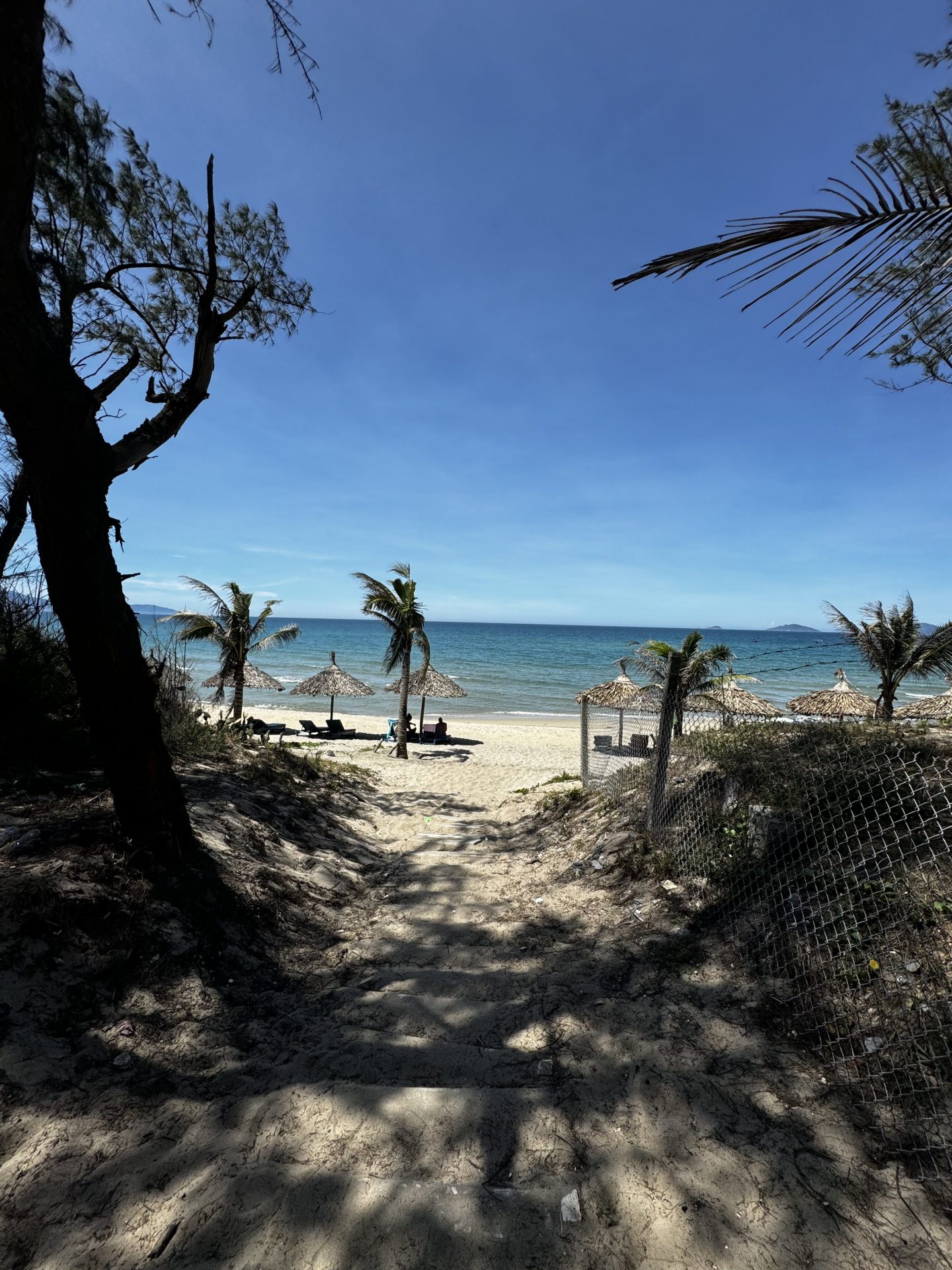
Da Nang is the practical choice for most nomads. It is the right size for long stays: large enough to have genuine infrastructure, small enough that you learn the shape of it quickly. My Khe Beach is within cycling distance of the main café and coworking areas. The mountains are behind you. Hoi An is 40 minutes south by Grab or motorbike.
The neighbourhood that works best for a first base is the An Thuong area, running south towards My An along the beach strip at around 16.0545°N, 108.2475°E. This is where the highest concentration of cafés, coworking spaces, and other nomads sits. It is also where the construction is most active and the karaoke bars are closest. If you need quiet evenings, push further towards Son Tra Peninsula, where rents drop and the nature reserve starts. For people who want to escape the expat bubble entirely, Hai Chau district is the downtown core: local Vietnamese feel, good transport links, about three kilometres from the beach.
Da Nang is getting busier in 2026. That is good for infrastructure and social life. It is not good for prices or the sense of discovery. The direction of travel is clear. Come now if you want it before it fully matures.
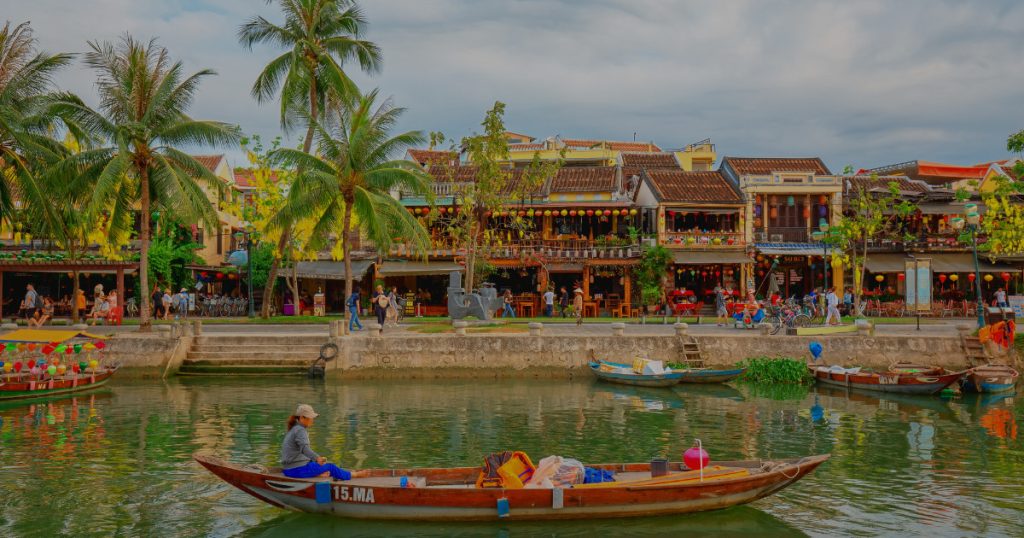
Hoi An is a different proposition entirely. Where Da Nang is a working city you happen to find beautiful, Hoi An is beautiful first and everything else second. The ancient town with its lanterns and yellow walls is genuinely extraordinary, and you stop noticing it after about a week, which is when you realise how good it is as a base.
Two areas work well for staying. The An Bang Beach zone is four kilometres from the old town along a quieter stretch of coast. Less built up, lower noise levels, cycling distance to everywhere you need. Cam Nam, the island just across the river from the ancient town, offers almost rural calm with a bicycle ride into the thick of things whenever you want it.
Hoi An is livable in a way that Da Nang is not quite yet. The pace is slower, the streets are prettier, the café culture is excellent. The coworking options are fewer and slightly more expensive. If you want to be left alone to work in a beautiful place and come out for dinner, Hoi An wins. If you need community and regular meetups, Da Nang has the infrastructure.
Ho Chi Minh City is for people who want to be in the middle of everything, and who are prepared to pay for that in noise, traffic, and relentless energy. It is Vietnam’s largest and most international city, with a serious coworking scene, regular professional networking events, world-class food at every price point, and a nightlife that runs later and harder than anywhere else in the country.
The trade-off is honest: peace and quiet are not part of the offer. HCMC is a city of 9 million people and it feels like it. The traffic is its own daily negotiation. District 2 (Thao Dien) is where most nomads and expats land. Newer apartments, more international restaurants, slightly more breathing room than District 1, but even here the city’s energy finds you. For people who thrive in density and want a proper social and professional scene, HCMC is hard to beat in Southeast Asia. For people who need quiet to work well, it will wear you out.
Hanoi is the most culturally rich of Vietnam’s four main bases. It is described repeatedly as “unapologetically Vietnamese” in a way the other cities are not: the Old Quarter’s 36 guild streets, the French colonial architecture, the egg coffee that is genuinely worth the hype, the proximity to Ha Long Bay and the northern highlands. For nomads who prioritise depth of place over convenience, Hanoi tends to generate the strongest long-term attachment.
Tay Ho, the West Lake area, is where most nomads and expats settle: quieter than the Old Quarter, more English spoken, a café strip that is genuinely excellent for working. The coworking scene is solid. COGO Coworking at 1 P. Thai Ha in Dong Da is the most consistently recommended, open 24/7, day passes around £3, monthly from £60. Toong, with multiple Hanoi locations, is the more polished corporate option.
The honest caveats: Hanoi has an air quality problem. Winter months see AQI readings that regularly push into unhealthy territory. It’s cash-heavy. And it is colder than the rest of the country, which is either a selling point or a deterrent depending on who you are.
Internet, coworking, and working hours
Vietnam’s internet is a genuine selling point, not a tolerable compromise. Fixed broadband averages around 165 Mbps nationally, putting the country in the top 35 in the world, ahead of most of Western Europe. Da Nang leads the country in 5G speeds with average 5G downloads above 677 Mbps in early 2026. As a practical matter: café WiFi is fast, coworking spaces are fast, apartment connections are fast. It is not something you spend time worrying about in any of the four cities.
Café working is completely viable and widely practised across Vietnam. Most cafés in Da Nang, Hoi An, Hanoi, and HCMC have reliable WiFi, comfortable seating, and staff who understand that laptop workers are part of the customer base. Nobody rushes you out. For lighter working days any decent café handles it. For long focus sessions or important calls, a coworking space is worth the small cost.
In HCMC, The Hive in District 1 is the most nomad-friendly option: six floors, rooftop, strong community events, monthly from around £75. Dreamplex is the more corporate choice for client-facing work. In Hanoi, COGO Coworking (Dong Da) is the community favourite: 24/7, affordable, and honest about what it is.
The time zone is UTC+7 across all of Vietnam, with no daylight saving. For anyone working with European clients, that means your afternoon is their morning. A full day of focused solo work before the calls start is a productivity setup that takes some adjustment and then becomes hard to give up.
Banking and money
Revolut, Wise, and Monzo all work well throughout Vietnam. Use any of them as your day-to-day card for places that accept payment, which is most mid-range restaurants and any international-facing business.
Carry cash. Vietnam still runs significantly on it, particularly for street food, local markets, smaller cafés, and anything away from tourist infrastructure. Hanoi is notably more cash-heavy than the other cities, and even some upscale establishments don’t take cards, which catches people off guard. Withdraw a reasonable amount on arrival and keep it stocked. ATMs charge around £1 to £2 per transaction, so withdraw larger amounts less frequently. The mental conversion is simple: divide Vietnamese dong by 30,000 to get the rough GBP figure.
Your first local taxi anywhere in Vietnam is likely to cost around £1.50 for a 15-minute ride. The number on the screen looks like a misprint until you’ve done it a few times and stopped questioning it.
SIM and connectivity
For arrival, Airalo eSIM on the Viettel network is the easiest option. Buy before you leave, activate when you land, skip the airport queue. For a stay of a month or more, switching to a local Viettel physical SIM is worth the ten minutes at an official store. A local monthly data plan costs £5 to £8 with significantly more data than any eSIM package at the same price. You’ll need your passport to register. It’s a five-minute process.
Viettel has the best nationwide coverage, which matters if you travel between cities or into the mountains. Coverage is strong across Da Nang, Hoi An, Hanoi, and HCMC. It drops in rural areas and on longer mountain routes, but that is not a problem for city-based working. Download offline maps before any road trip out of the main centres.
Community and social life
Da Nang has a real nomad community. Not just nomads present in the same city, but Facebook groups, Telegram channels, and regular meetups connecting a population of remote workers that has reached critical mass. The “Da Nang Digital Nomads” Facebook group is the most active. Meetup.com has a Da Nang-specific section with regular events. Da Nang Nomad Fest runs annually in March and brings a concentrated burst of workshops, talks, and introductions in one place.
Hoi An has fewer structures but the community is tighter. The smaller pool of long-term nomads means you meet the same people repeatedly, which tends to produce more genuine friendships than a city where everyone is passing through. An Bang Beach has a particular cluster of regulars who have been coming back for years.
HCMC has the largest volume of nomads and expats, with the most organised professional events, startup meetups, and networking opportunities. It is easier to find your crowd there if your crowd is professionally-focused. It is also the city where the nomad scene most risks becoming a bubble within a bubble.
Hanoi has a growing but smaller nomad community, concentrated around Tay Ho. The city rewards people who make an effort to engage with it on its own terms rather than looking for a ready-made expat scene.
English is workable in all four cities in areas with nomad and tourist traffic. Outside those zones it drops off quickly. Hanoi is the most challenging, Da Nang and Hoi An the most accessible. Google Translate’s camera function becomes a genuine daily tool for menus, signs, and anything handwritten. It is not a friction point that goes away, but you adapt to it within a week and stop noticing it.
What I keep finding after years of returning: the Vietnamese people who get to know you, the café owner who has your order ready or the landlord who fixes things without being asked, are warm in a way that is easy to miss if you only stay a week. It takes longer than a week to get there. That is also kind of the point.
The honest downsides
Construction. Everywhere, every morning, from early. Vietnam is building at speed and Da Nang in particular sounds like it. Light sleepers and people who work best in quiet mornings will feel this. It is not a temporary situation. Son Tra and Cam Nam are quieter. Factor it into neighbourhood choice before you commit to a lease.
No nomad visa. The 90-day e-visa is practical but it requires a visa run every quarter. That is time, money (£120 to £180 per run), and administrative overhead that comparable destinations in Southeast Asia have already removed. Thailand has the DTV. Malaysia has De Rantau. Vietnam does not have an equivalent yet. When it arrives, the score changes. Until it does, quarterly departures are part of the deal.
The crowd is arriving. Da Nang is now on lists. Forbes, Nomads.com, every “best of 2026” round-up. The infrastructure that comes with recognition is useful. The price increases and tourist saturation in popular areas are less welcome. An Thuong is busy. The direction of travel is clearly upward on cost across all the main cities.
Noise and unpredictability. Power cuts happen. Some locals are loud in ways that catch Western visitors off guard. Karaoke carries further than you expect at 11pm. Hanoi traffic is a different level of chaotic from the other cities. These are not catastrophic problems, but they accumulate in the background and require a tolerance for unpredictability that Vietnam either has or teaches you.
Air quality in Hanoi. Winter AQI readings in Hanoi regularly push into unhealthy territory. If you are sensitive to air pollution or plan to exercise outdoors year-round, this is a real factor that most guides underplay. Da Nang and Hoi An have significantly cleaner air.
Tax residency risk for long stays. More than 183 days in a calendar year triggers Vietnamese tax residency and potential exposure on worldwide income. If you are planning an extended stint, get proper tax advice before committing. Staying under the threshold or splitting the year is the standard approach.
Sightsaw Studio works with tourism boards to attract nomads who stay longer.
Monthly cost calculator
Quick reference
| Country | Vietnam |
| Primary cities | Da Nang, Hoi An, Ho Chi Minh City, Hanoi |
| Nomad score | 7.5 / 10 (potential 9.0) |
| Monthly budget | £600 to £900 comfortable (Da Nang / Hoi An) |
| Long-term rent | £220 to £380/month (1-bed, Da Nang) |
| Short-term rent | £15 to £25/day |
| Visa-free | 45 days, UK, EU, US, Australia |
| Digital nomad visa | None. E-visa 90 days ($50 USD multiple entry) |
| DNV income req. | N/A |
| Internet (Da Nang) | ~165 Mbps fixed broadband average. 5G widely available. |
| Time zone | UTC+7, no daylight saving |
| Best months | January to August (Da Nang / Hoi An). Oct to Apr (HCMC / Hanoi dry season) |
| Avoid | Oct to Nov Da Nang/Hoi An (typhoon/flooding). Dec to Feb Hanoi (cold, high pollution) |
| Top coworking | Enouvo Space, Da Nang (5-7 An Thuong 32) |
| Best SIM | Airalo eSIM on arrival. Local Viettel SIM for long stays. |
| Cards | Revolut, Wise, Monzo all work |
| Cash needed | Yes, carry it. Hanoi especially cash-heavy. |
| Language | Vietnamese. English workable in nomad areas, limited elsewhere. |
| Nomad community | Strong in Da Nang. Growing in HCMC and Hanoi. |
| Safety | High. Low violent crime. Standard petty theft awareness in tourist areas. |
| Last verified | April 2026 |